Who it's for
Anyone with an idea for a device who would rather build it than spend a week matching parts and pins.
Students
Turn a lab assignment or final-year project into a parts list you can buy, wiring you can explain and code that compiles.
Time goes into the project, not into hunting for a sensor that fits.
Makers
Go from "I want a plant waterer" to a working board in an evening, and ask questions the whole way.
The parts arrive together and they fit, so the project gets finished.
Engineers
Get a prototype on the bench fast. Check the power and the pin map, then take the sketch into Arduino IDE or PlatformIO.
The first version takes an afternoon, not a week of datasheets.
Hardware startups
Prove the idea with real, in-stock parts before you hire or order a PCB, and buy everything in one order in India.
A demo you can hold beats a slide. Building for a team or a pilot? Message us on WhatsApp.
A design you can actually build
Most tools name a component and leave you to find it. Soldr only picks parts that exist, are in stock and work together, and it checks the power and logic levels before you buy. Press buy and the same parts ship to you.
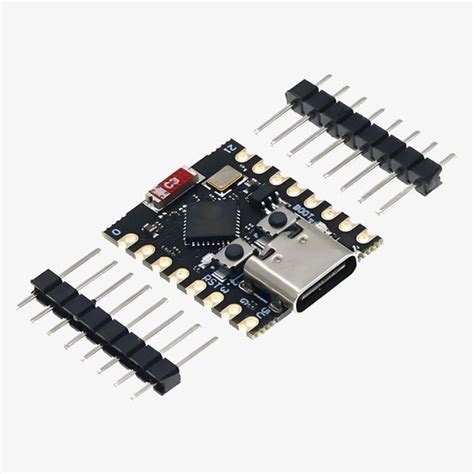 ESP32-C3 Super MiniController₹290
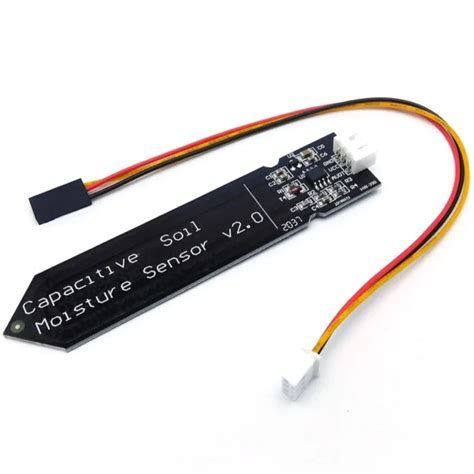 Capacitive Soil Moisture Sensor V2.0Moisture₹55
 12V Solenoid ValveLets the water through, 400 mA₹240
 5V Relay ModuleSwitches the valve from a 3.3V pin₹49
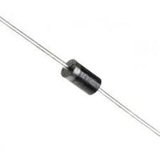 1N5819 DiodeAcross the valve, soaks up the turn-off spike₹25
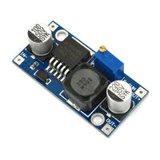 LM2596 Buck Converter12V down to 5V for the board and relay₹95
- 12V 2A Power SupplyOne plug powers everything₹350
- Jumper Wire ComboM-M, M-F and F-F, 20 cm₹95
- 8 parts, buy as one kit₹1,199
- Buy all 8 · ₹1,199 · COD
Prices and stock from the Compoden store on 17 Oct 2026. Own some of these? Remove them in the cart before checkout.
- Logic level · Compoden lists this relay as "5V (3.3V logic compatible)", so the 3.3V pin drives it
- Spike protection · a diode sits across the valve coil
- Power budget · valve 400 mA at 12V; relay 80 mA and the ESP32-C3 (up to about 350 mA in Wi-Fi bursts) at 5V. All well inside the 2 A adapter
The whole bench, in one place
One plain sentence gives you all of this, and you can keep changing it until it's right.
- The parts
- A full build from one sentence, with parts that work together.
- The wiring
- Every connection, pin by pin, for the board you named.
- The schematic
- A real circuit diagram, not a photo of a breadboard.
- The code
- Code for 600+ boards, flashed from the browser on common ESP32 boards and the Arduino Uno, Nano and Mega, or copied into your own IDE.
- Pixel Studio
- Icons, QR codes and animations for an OLED, an LED matrix or a WS2812 ring.
- Screen layout
- Drag text, bars and icons onto a display, link them to readings and get the matching code.
- Dashboard preview
- See the web page your build will serve before you buy a single part.
- Answers
- Ask anything at any point, in plain words.
After the parts arrive, Soldr stays with you through setup, testing, a serial plotter and troubleshooting.
How a build goes
First, say what you want.
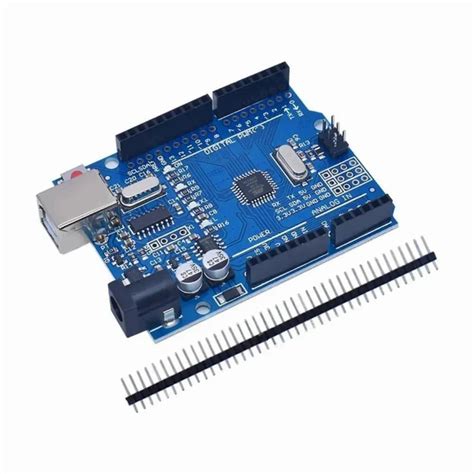 Uno R3, CH340GRuns the code₹299
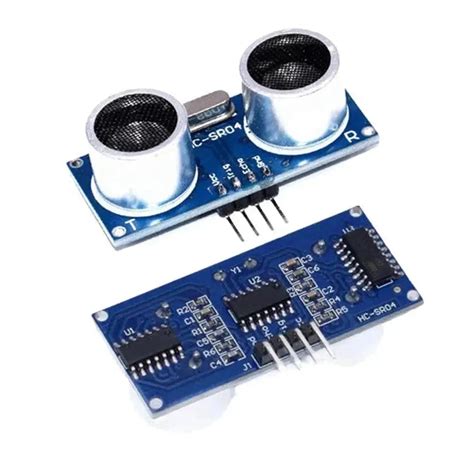 HC-SR04 ultrasonicSees your hand, 2 to 400 cm₹85
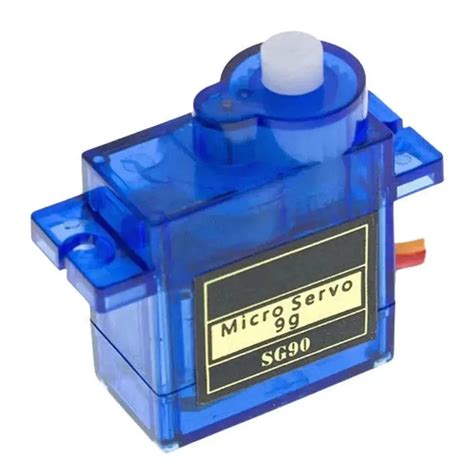 SG90 micro servoLifts the lid₹99
- Jumper Wire ComboConnects it all₹95
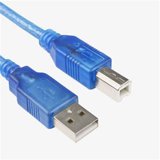 USB A-to-B cable, 1 mFlashes and powers the Uno (not in the Uno box)₹75
- 5 parts, all in stock₹653
- Buy all 5 · ₹653 · COD
Prices and stock from the Compoden store on 17 Oct 2026. Own some of these? Remove them in the cart before checkout.
Then it wires every pin.
| From | To |
|---|---|
| HC-SR04 VCC | 5V |
| HC-SR04 TRIG | D2 |
| HC-SR04 ECHO | D3 |
| SG90 power (red) | 5V |
| SG90 signal (orange) | D4 |
| All grounds | GND |
Power check: one SG90 on a light lid runs from the Uno's 5V. If the lid is heavy, Soldr gives the servo its own 5V supply, with the grounds joined.
Then you flash it from the browser.
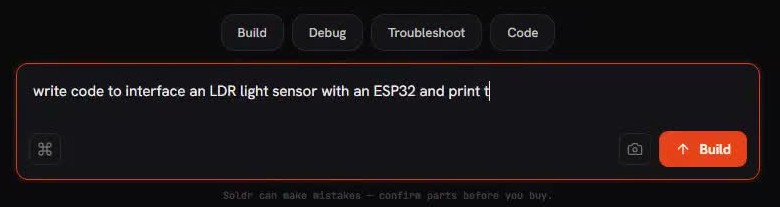
Onto the board
Flash it from your browser, or use your own IDE.
Common ESP32 boards and the Arduino Uno, Nano and Mega flash from a Chrome or Edge tab on a laptop. Raspberry Pi Pico boards take one file you drop onto the board. Some clone boards need a one-time USB driver. For any board, you can copy the sketch into Arduino IDE, PlatformIO or the IDE you already use. Sensors, motors, drivers and displays are covered too.
- Arduino Uno
- Nano
- Mega
- ESP32
- ESP32-S3
- Seeed XIAO
- Wio Terminal
- M5Stack Core Ink
- Pi Pico
- STM32
- and hundreds more
Already own a part?
Picked
Does it work?
Every build here came out of Soldr. Three ran on real boards; the other three compile clean and are next on the bench.
Pay as you use. No subscription.
1 credit is ₹1, and credits never expire. Your first build is free. A typical build uses about 70 credits; big ones use 150 to 200.
Sign in and build something real before you pay anything.
Start freeAsking is always free. Questions, troubleshooting and help after you buy cost nothing. Only generated code uses credits.
Parts are separate. Buy them on Compoden, one cart per build. COD across India; a few states pay a small advance, shown at checkout.
Arduino and ESP32 project questions
Do I need to install anything?
Not for common ESP32 boards (DevKit, S3, C3), or the Uno, Nano, Mega and Pico. Soldr runs in Chrome or Edge on a laptop: common ESP32 boards and the Uno, Nano and Mega flash over USB, and Pico boards take one file you drop onto them. Other boards, such as STM32, use the Arduino IDE. Some clone boards need a one-time USB driver.
Does it work on my phone?
You can plan a build, ask questions and buy the parts on your phone. Flashing the board needs a laptop with Chrome or Edge and a USB cable.
Can I use it for my final-year project?
Yes. You get a parts list, a wiring table you can explain and code that compiles. For your report or viva, ask Soldr anything you need answered: why a part was picked, what a pin does, how the code works.
Which boards does it build for?
Soldr writes code for 600+ boards. Common ESP32 boards (DevKit, S3, C3) and the Arduino Uno, Nano and Mega flash straight from the browser. Raspberry Pi Pico boards get one file you drop onto the board. The rest, such as STM32 and UNO R4, get code you upload from the Arduino IDE.
What does it cost?
Your first build is free when you sign in, plus 25 credits. After that a typical build uses about 70 credits, and big ones 150 to 200. Packs start at ₹100, are paid once and never expire. There is no subscription. Asking questions is always free.
Where do the parts come from?
From Compoden, our parts store in Bengaluru. Buy Arduino and ESP32 parts online in India, one cart per build, with COD. Anything you buy comes from our stock, and you can tell Soldr which parts you already own.
Can I pay on delivery?
Yes, COD across India. A few states pay a small advance, shown at checkout before you order.
I already have some parts. Now what?
Tell Soldr what you own and it builds around it, even a board Compoden doesn't sell. Leave anything you don't need out of the cart.
Can it get things wrong?
It can. Before you buy, it checks pin conflicts, logic levels and the power budget, and it asks you to confirm the parts.
Is my code mine?
Yes. Copy it into any IDE and keep it. Sharing a build is your choice.
Beyond the build
- Compoden on WhatsAppAsk about an order or a part.
- Parts catalogueThousands of parts and kits, with live prices.
- Project kitsOne order for the whole project.
Sell your parts through Soldr
Soldr picks the parts for every build, and we stock them. If you make or distribute components, send us your range.
- First, send your catalogueWholesale prices, GST and PAN. We only ask for bank details once you're accepted.
- Then we stock your productsThey join the catalogue with specs and datasheets, ready for builds.
- Then we buy from youRepeat purchase orders, as builds need your parts.
Built in India. For the world.
Soldr is made by engineers in India. The parts ship across India, and the app works wherever you are.
Describe your idea. Soldr takes it all the way. Your first build is free when you sign in.